


Hot Start Problems: Vapor Lock and Hot Soak
A common Z31 complaint: the car runs fine, you shut it off for 10 to 30 minutes (a fuel stop, a quick errand), and when you come back it cranks and cranks but won't start, or it starts and stumbles badly for a few seconds. Once it has cooled down, or after a long crank, it runs normally again.
This is called a hot soak condition. While the engine runs, moving air and flowing fuel keep the fuel rail and injectors cool. Once the engine is off, heat from the block and exhaust soaks up into the intake area with nothing to carry it away. The fuel in the rail and injectors gets hot enough to boil, and the vapor bubbles (vapor lock) give the engine a mixture that is too lean or too rich to light. Turbo cars suffer the most, since the turbo and its plumbing keep putting heat into the engine bay after shutdown.
Getting a Hot Engine Started
Hold the accelerator all the way to the floor while you crank. Don't pump it. With the throttle wide open, the engine gets the extra air it needs to clear the vapor-laden mixture, and it will usually fire within a few seconds. Let off the pedal as soon as it starts.

If this is the only way your car will start hot, it works, but it isn't a fix. Go through the checks below.
What to Check
1. Injector cooling blower and ducting
Nissan fitted the Z31 with a small electric blower and ductwork that blows air over the fuel injectors to fight exactly this problem. It's often missing on older cars: the duct cracks or falls off, or the blower is removed during other work and never put back. Check that your car still has the blower and ducts, that the ducts are connected and pointed at the injectors, and that the blower actually runs.
2. The cooling system
An engine that runs hot to begin with heat-soaks much worse. Make sure that:
- The system is completely full of coolant and properly bled, with no air pockets.
- The radiator is cooling well: not clogged, with clean fins and good flow.
- The fan clutch and any electric fans are working.
Our overheating and fan clutch pages cover this in more detail.
3. The power transistor (ignition)
Not every hot no-start is fuel. The other common cause is the power transistor (ignition transistor unit), 22020-12P11. As it starts to fail, it opens up when it gets hot and you lose spark until it cools down. The symptoms match vapor lock: it runs fine cold, then cranks without starting after a hot stop. At first it may only act up on the hottest days, and it gets worse as the part fails.
To tell the two apart, check for spark while the car won't start hot. No spark points to the transistor. Good spark points back to fuel and vapor lock. Cars built after 8/1987 have the revised transistor, 22020-26P10.
4. Residual fuel pressure
The fuel system is supposed to hold pressure after shutdown, and the pressure keeps hot fuel from boiling. If a leaking injector, the fuel pressure regulator or the pump's check valve lets the pressure bleed off, vapor lock gets much worse. A fuel pressure gauge on the rail will show whether pressure holds after the engine is shut off. A tired fuel filter doesn't help either.
Nissan's Fixes
| Part | Part number | Notes |
|---|---|---|
| Hot start assist module | A18-800 100 | Installed at the factory to help with the hot no-start problem (and others). It masks the problem rather than curing the cause, so check the items above first. |
| Ignition transistor unit (early) | 22020-12P11 | Used 9/1983 to 8/1987. Can open up when overheating. |
| Ignition transistor unit (revised) | 22020-26P10 | Used from 8/1987 on. |
The hot start assist module
The module is a small black box with a short pigtail and connector, mounted under the battery tray. The part number is on the label.
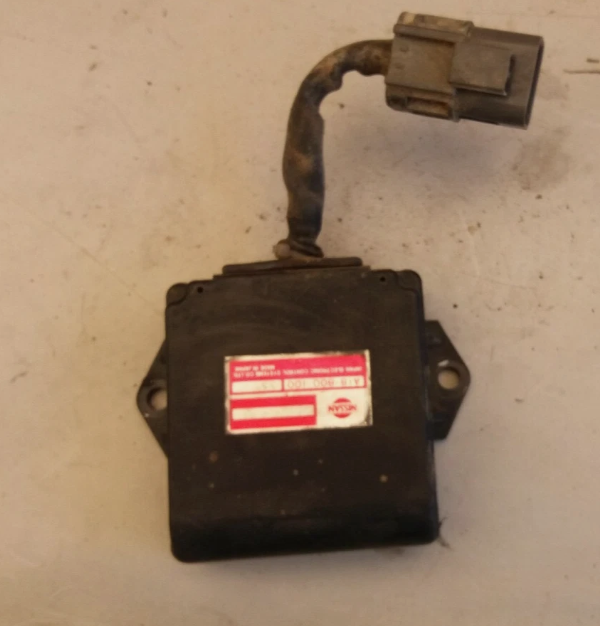
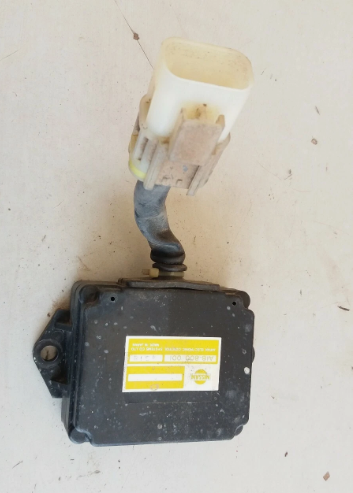
Nissan corrected these issues starting with the 1987 models, so late cars see the problem much less often.
Credits
- Written by Joseph "XenonXIII" Melnick