


S30 Model Year Differences
The S30 Z car was sold in the U.S. from late 1969 to 1978 as the Datsun 240Z, 260Z and 280Z. In those years it grew from a light, carbureted 2.4 liter sports car into a heavier, fuel-injected 2.8 liter car with 5 mph bumpers, a 2+2 body and an optional 5-speed.
Nissan made many changes during production instead of waiting for a new model year, so the build date (the month and year on the door jamb tag) often tells you more than the model year. When a part doesn't fit, check the build date first. If the tag is missing, the VIN is also on a plate at the driver's side of the dash, on the ID plate under the hood and stamped into the firewall; see Decoding Your VIN.
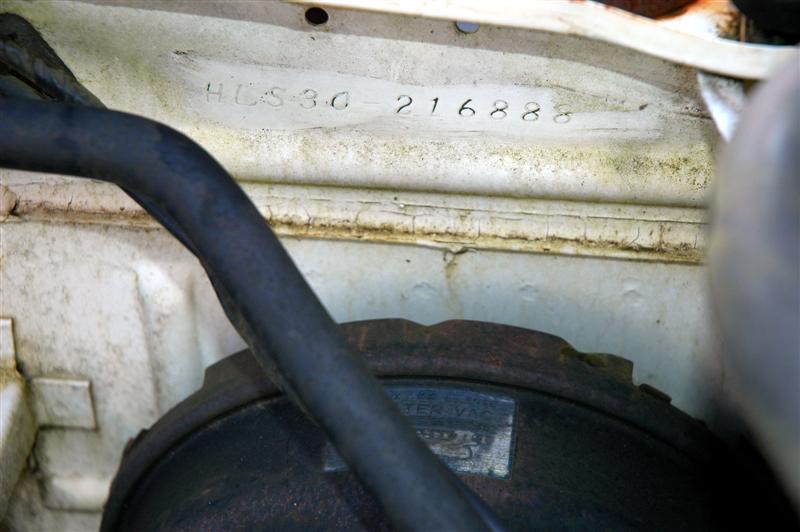
Collectors split the 240Z into four series by build date:
| Series | Built | How to spot it |
|---|---|---|
| Series I | October 1969 – January 1971 | Vents in the rear hatch, "240Z" C-pillar badges |
| Series II | February – August 1971 | Round "Z" C-pillar vents, speedometer starts at 0 |
| Series III | August 1971 – September 1972 | New center console, cigarette lighter in the dash, seat belt warning buzzer |
| Series IV | September 1972 – September 1973 | Steel headlight buckets, flat-top carburetors, bumpers mounted farther out |
This page covers the U.S. models. Other markets got different cars; see Other Markets at the end.
Year by Year
1970 240Z (Series I)
- The first U.S. Z cars, sold with the HLS30 chassis prefix. Nissan built 543 240Zs from October to December 1969, and nearly all were sold as 1970 models; there is no "1969 240Z" model year. The first 12 were production prototypes that were not sold to the public.
- The VIN alone won't always settle 1970 vs. early 1971: 1970 cars run up to about HLS30-11600, while early 1971 cars start around HLS30-05500, so the ranges overlap.
- L24 2.4 liter six on the E31 block with the E31 head, a high-quench head with smaller valves and 9.13:1 compression: 151 hp (SAE gross).
- Twin SU carburetors with 4-screw "bell" top domes and no water warm-up passages.
- 4-speed manual only.
- 14 x 4.5 inch steel wheels with hub caps that have curved rectangular openings and a "D" emblem.
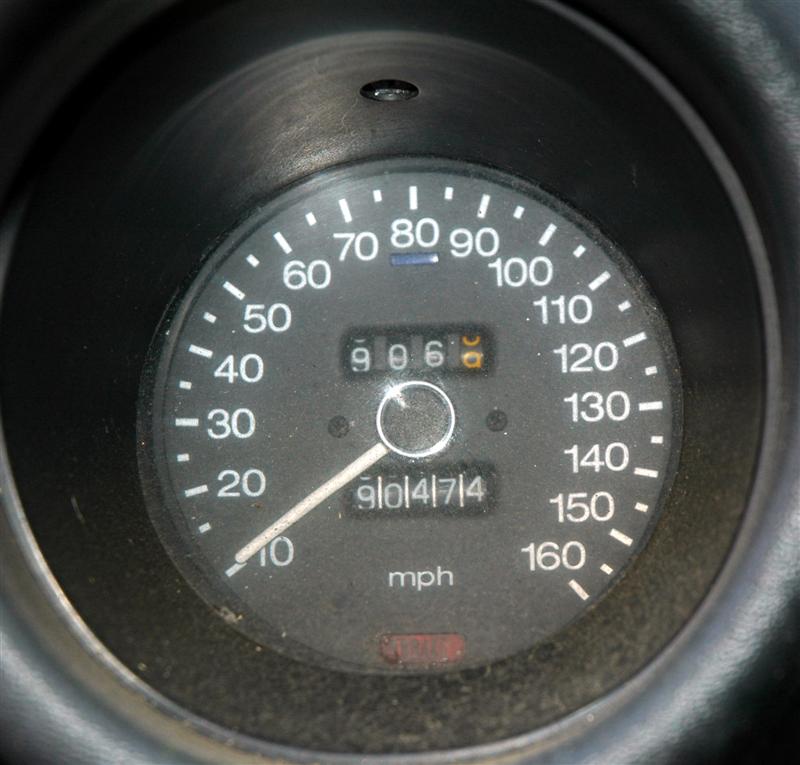
- Fiberglass headlight buckets, a wood-rimmed steering wheel with indents in the spokes, and a speedometer that starts at 20.
- Non-reclining seats and no storage bins behind the seats; the tools were kept under the seats.
- Collectors call the early cars Series I. The easiest way to spot one is the two horizontal vents in the rear hatch below the window. Series I cars also have "240Z" C-pillar badges with no vent hole behind them. "Series I" and "Series II" are collector terms; Nissan never used them.
1971 240Z
- September 1970: the 3-speed automatic (3N71B) became available. These cars have a "Nissan Full Automatic" badge on the hatch.
- February 1971 (Series II): the hatch vents were deleted after complaints of exhaust fumes getting into the car. Vents moved to the sail panels, behind new round "Z" emblems. Other changes at the same time:
- New steering wheel with holes in the spokes instead of indents
- Redesigned ventilation controls and a hood over the map light
- Speedometer starts at 0 instead of 20, and a recalibrated oil pressure gauge
- Faster wipers, bigger sun visors and a two-stage door check
- Push-button seat belt buckles and HR-rated instead of SR-rated tires
- Reclining seat backs became an option
- The P30 block and E88 head replaced the E31 parts.
- Nissan's 1971 service manual supplement covers the changes for this year.
1972 240Z
- October 1971: reclining seats became standard, and the wheels were widened from 4.5 to 5 inches. New flat-face "teardrop" hub caps have softer triangular openings and a "Z" emblem, the easiest way to tell a 1972 from a late 1971 if the car still has its original wheels. The center console was redesigned, and the fuel filler door release was deleted.
- January 1972: automatic seat belt retractors and a seat belt warning buzzer and light. The rear window defroster lines changed from vertical to horizontal.
- Revised SU carburetors: the domes are held by 3 screws, the front and rear carbs use different rebuild parts, and the bases have warm-water passages for faster cold starts. They match a new intake manifold and spacer.
1973 240Z
- August 1972: the last big round of 240Z changes, mostly for U.S. safety and emission rules.
- New Hitachi "flat top" SU carburetors, built for U.S. emission rules, with a "power valve", an EGR-equipped balance tube, new center linkage and a water warm-up system.
- Steel headlight buckets replaced the fiberglass ones.
- Bumpers mounted farther out from the body, which makes a 1973 a little longer than earlier 240Zs. Some sources call these 5 mph bumpers, but they are still the slim 240Z style; the large 5 mph bumpers came on the 1974½ 260Z.
- Flame-retardant upholstery, a new hazard switch, lit heater controls and an intermittent wiper setting.
- The last two-seat 240Z was built in August 1973. Nissan's figures give 164,616 export 240Zs from 1970 to 1973 (see Production Numbers).
1974 260Z
- The engine grew to the L26 (2565cc) by using a longer 79.0mm stroke crank in the same 83.0mm bore P30 block: 139 hp and 157 lb-ft. The E88 head was kept, in a larger-valve version.
- New chassis prefix RLS30. The 2+2 body (GRLS30) arrived, with a longer wheelbase and two small rear seats.
- Still on "flat top" carburetors, with changes to the smog equipment, balance tube and EGR system.
- New gear ratios in the 4-speed (see Transmissions).
- All-new interior: a new dash with the gauges less deeply recessed, new heater controls, a new center console and a new steering wheel. The 260Z/280Z interior carried on to 1978.
- New tail lights, with the reverse lights moved out of the tail light housings.
- Electronic ignition, used from the 260Z on.
- Front and rear anti-roll bars as standard; the 240Z had none at the rear.
- Stronger, round front hubs with a matching taller-hat rotor (see Hub Differences).
- Air conditioning got its own section in the factory service manual from this year on.
- U.S. 260Zs were built for about 18 months. Early cars kept the 1973 240Z bumpers with rubber overriders. Cars built later, into the first months of 1975, got the large 5 mph bumpers and are often called "1974½" 260Zs. The bumpers add about 6 inches of length; the body itself is the same size. The late 260Z shell is the same as the 280Z's: a lower front valance with a bigger radiator opening, the front turn signals moved up into the grille under the hood, a much wider transmission tunnel, and stronger frame rails and T/C rod mounts.
- The 260Z was sold in the U.S. for this one year only.
1975 280Z
- The L28 (2753cc) on the new N42 block with an 86.0mm bore, and the first L-series engine sold in the U.S. with fuel injection (Bosch L-Jetronic). Published power figures vary by source, from 149 to 170 hp.
- The larger-valve N42 head with square exhaust ports. Because 48-state cars had no catalytic converter until 1977, it has softer valve seats for leaded fuel.
- 5 mph bumpers on every car. 2-seater and 2+2 bodies.
- New 4-speed gear ratios, and the car kept the HLS30 chassis prefix.
- Stiffer springs than the 240Z (see Springs).
1976 280Z
- Mechanically a carry-over of the 1975 car.
- The shoulder belt mount moved from the C-pillar to the rear strut tower, so the belt no longer rubs your neck.
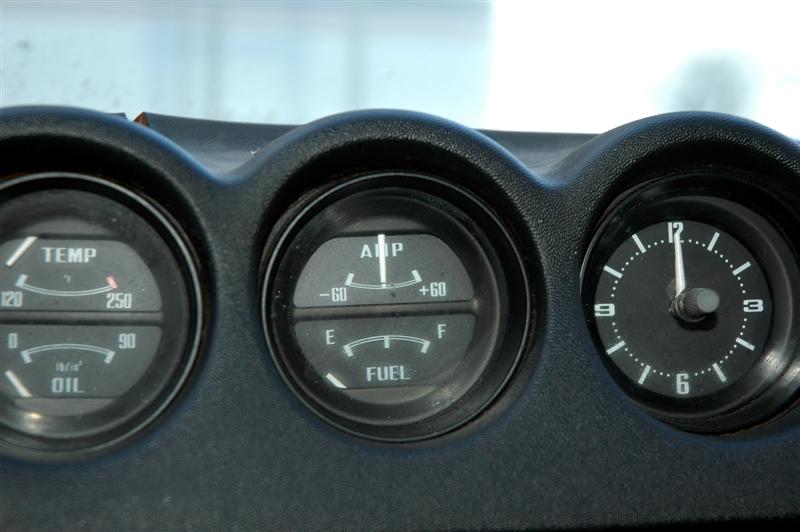
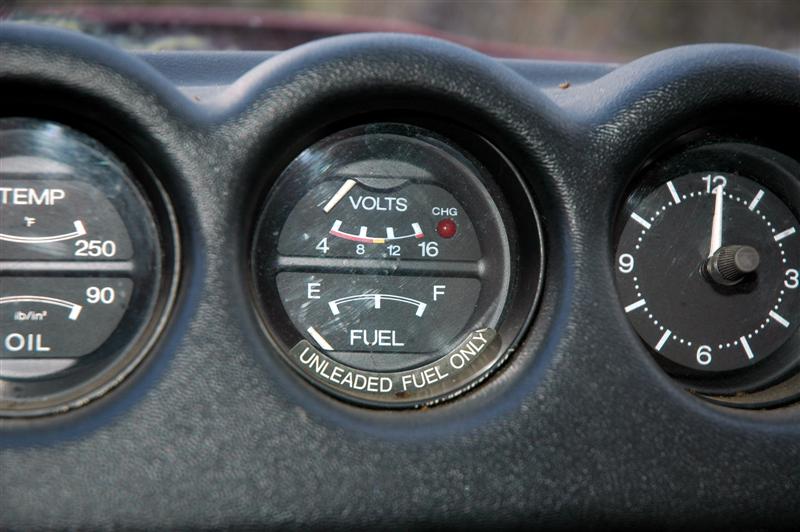
- The ammeter was replaced by a voltmeter with a built-in charge warning light (the 1975 service manual shows an AMP-FUEL gauge, the 1976 manual a VOLT-FUEL gauge).
1977 280Z
- The 5-speed manual joined the U.S. line-up, the first time a 5-speed was offered here. It is a wide-ratio box with a 0.864 overdrive 5th gear.
- All U.S. cars now used a catalytic converter and unleaded fuel. Heads from this year on have steel valve seats.
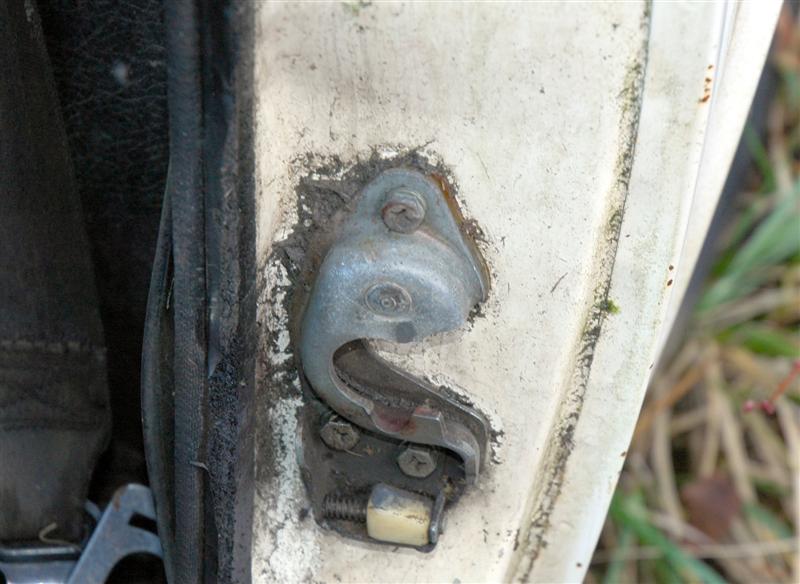
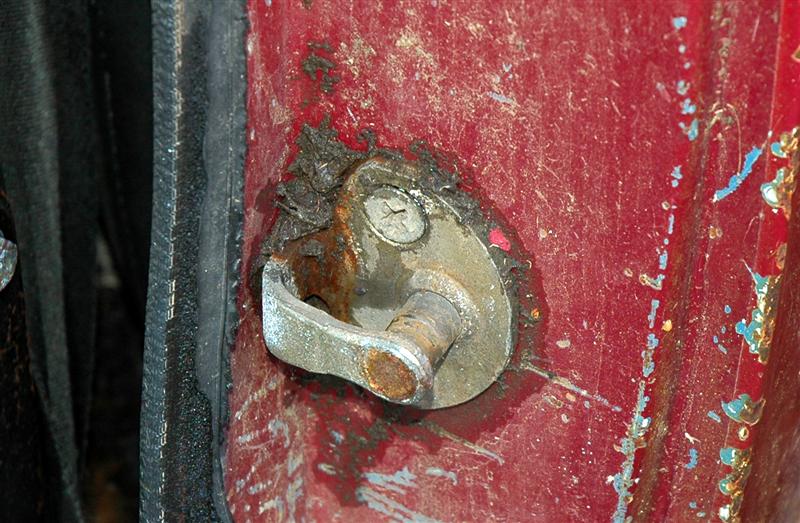
- Redesigned doors: heavier, with smoother window regulators, a relocated window crank and lock, and a different striker. 1977–78 doors don't interchange with 1970–76 doors.
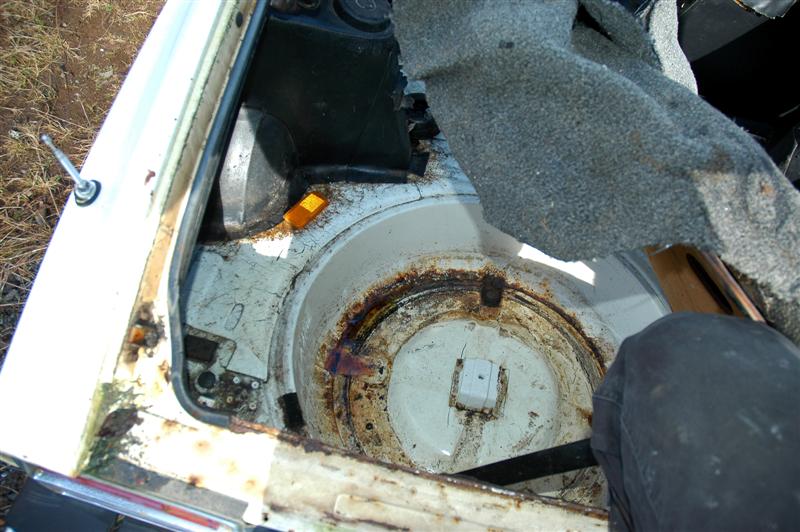
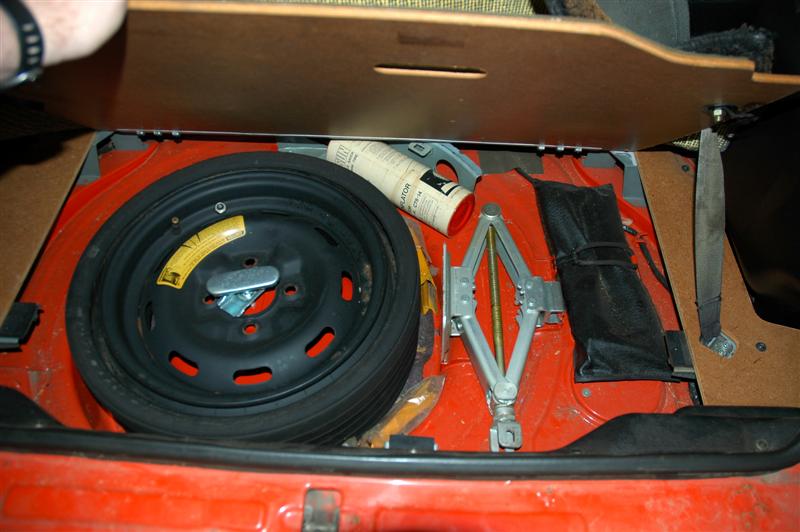
- A larger fuel tank took space from the spare tire well, so the car got a space-saver spare under a raised hatch floor. Earlier cars have a full-size spare.
- New lettering on the gauges.
- A louvered hood and rubber bumper extensions.
- Hagerty says the N47 head arrived this year; other sources (including our head chart) give 1978. Check the casting number between the 1st and 2nd spark plugs.
- Special edition: the Z-Zap Z.
1978 280Z
- The N47 head replaced the N42. It has diamond-shaped exhaust ports with emission liners.
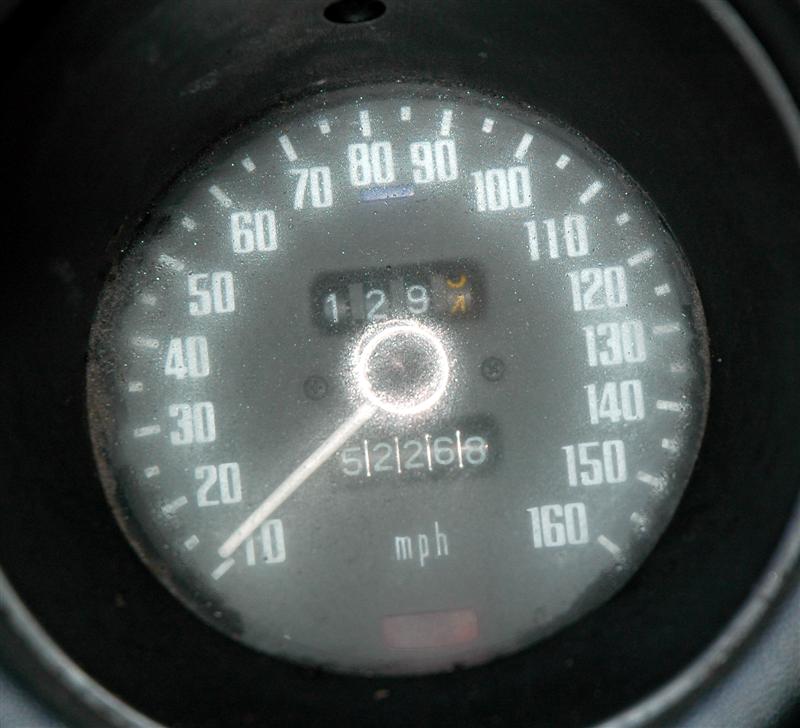
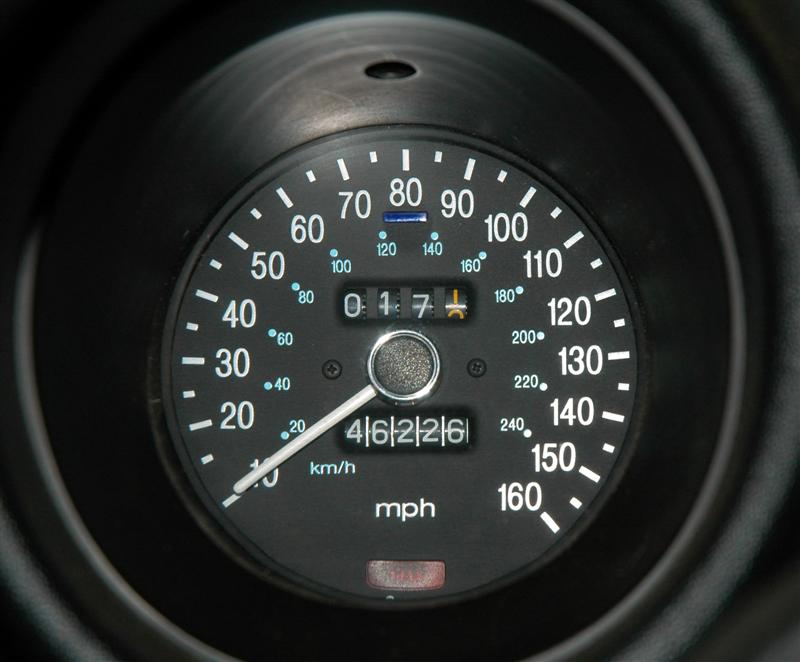
- The speedometer added km/h markings in small blue print.
- Special edition: the Black Pearl.
- The last year of the S30. The 280ZX (S130) replaced it for 1979.
Side by Side
The U.S. models year by year. Scroll the table sideways on a phone.
| Year | Model | Engine | Head | Fuel system | Manual | Automatic | Bodies | Bumpers |
|---|---|---|---|---|---|---|---|---|
| 1970 | 240Z | L24 2393cc | E31 | Twin SU, 4-screw "bell" tops | 4-speed | — | 2-seater | Small |
| 1971 | 240Z | L24 2393cc | E88 | Twin SU, 4-screw "bell" tops | 4-speed | 3-speed 3N71B | 2-seater | Small |
| 1972 | 240Z | L24 2393cc | E88 | Twin SU, 3-screw "bell" tops | 4-speed | 3-speed 3N71B | 2-seater | Small |
| 1973 | 240Z | L24 2393cc | E88 | Twin Hitachi "flat top" SU | 4-speed | 3-speed 3N71B | 2-seater | Small |
| 1974 | 260Z | L26 2565cc | E88 | Twin Hitachi "flat top" SU | 4-speed | 3-speed 3N71B | 2-seater, 2+2 | Small, then 5 mph |
| 1975 | 280Z | L28 2753cc | N42 | Bosch L-Jetronic fuel injection | 4-speed | 3-speed 3N71B | 2-seater, 2+2 | 5 mph |
| 1976 | 280Z | L28 2753cc | N42 | Bosch L-Jetronic fuel injection | 4-speed | 3-speed 3N71B | 2-seater, 2+2 | 5 mph |
| 1977 | 280Z | L28 2753cc | N42 or N47 (check the casting) | Bosch L-Jetronic fuel injection | 4-speed or 5-speed | 3-speed 3N71B | 2-seater, 2+2 | 5 mph |
| 1978 | 280Z | L28 2753cc | N47 | Bosch L-Jetronic fuel injection | 4-speed or 5-speed | 3-speed 3N71B | 2-seater, 2+2 | 5 mph |
Size and Weight
The car gained about 570 lbs from the first 240Z to the last 280Z, mostly from the bumpers, a stronger shell, emission equipment and more equipment inside.
| 240Z | 260Z | 280Z | |
|---|---|---|---|
| Wheelbase | 90.7 in | 90.7 in 2+2: 102.6 in | 90.7 in 2+2: 102.6 in |
| Length | 163.0 in | 163.0 in 2+2: 175.0 in | 173.2 in |
| Width | 64.2 in | 64.0 in | 64.2 in |
| Curb weight | 2,302 lbs | 2,425 lbs 2+2: 2,646 lbs | 2,875 lbs |
Sizes and weights are for the base U.S. models; options and bumper type change the weight. For how many of each were built, see S30 Production Numbers.
Engine and Heads
The block number is cast on the driver's side of the block, to the right of the motor mount. The head number is cast between the 1st and 2nd spark plug holes. More detail is on the Engine Specifications and Head Differences pages.
| Years | Engine | Block | Bore | Head | Compression | Chamber |
|---|---|---|---|---|---|---|
| 1970 | L24 2393cc | E31 | 83.0mm | E31 | 9.13:1 | 42.4cc |
| 1971–1973 | L24 2393cc | P30 | 83.0mm | E88 (small valve) | 8.76:1 | 44.7cc |
| 1974 | L26 2565cc | P30 | 83.0mm | E88 (large valve) | 8.26:1 (dished pistons) | 44.7cc |
| 1975–1976 | L28 2753cc | N42 | 86.0mm | N42 | 8.29:1 | 44.6cc |
| 1977 | L28 2753cc | N42 | 86.0mm | N42 or N47, with steel valve seats | 8.29:1 | 44.6cc |
| 1978 | L28 2753cc | N42 | 86.0mm | N47 | 8.29:1 | 44.6cc |
Carburetors and Fuel Injection
- 1970–1971: SU carburetors with "bell" top domes held by 4 screws. Front and rear use the same rebuild parts. No water warm-up passages; a square 4-hole spacer sits under each carb. These are a common swap onto 1973–1974 cars.
- 1972: "Bell" tops held by 3 screws, different front and rear rebuild parts, and warm-water passages in the bases with a matching intake manifold.
- 1973–1974: Hitachi "flat top" SUs with a power valve, EGR balance tube and water warm-up system. The 1974 versions have slightly different smog parts.
- 1975–1978: Bosch L-Jetronic electronic fuel injection.
For identifying and choosing carburetors, see Carburetor Differences. The fuel system for each year is in the EF section of that year's factory service manual.
Transmissions
Every U.S. S30 had a 4-speed manual available, the 3-speed 3N71B automatic was offered from 1971, and the 5-speed was added for 1977. The manual gear ratios changed with each engine:
| Gear | 240Z 1970–1973 | 260Z 1974 | 280Z 1975–1976 | 280Z 1977–1978 5-speed |
|---|---|---|---|---|
| 1st | 3.549 | 3.592 | 3.321 | 3.321 |
| 2nd | 2.197 | 2.246 | 2.077 | 2.077 |
| 3rd | 1.420 | 1.415 | 1.308 | 1.308 |
| 4th | 1.000 | 1.000 | 1.000 | 1.000 |
| 5th | — | — | — | 0.864 |
More on the manuals and the automatic's ID plate: Transmission Differences.
Springs
The cars got heavier over the years, and the factory springs got stiffer to match. All S30 springs interchange, but swapping them changes the ride height.
| Car | Front (lbs/in) | Rear (lbs/in) |
|---|---|---|
| 1973 coupe | 83.0 | 103.6 |
| 1975–1977 coupe | 103.0 | 127.7 |
| 1975–1977 2+2 | 115.04 | 127.7 |
Aftermarket rates are on the Spring Specs page.
Other Markets
- Europe and Australia: the 240Z (HS30) was offered with a 5-speed or automatic. The 260Z (RS30, and the GRS30 2+2) stayed on sale there after the U.S. moved to the 280Z, into late 1977.
- Japan: the Nissan Fairlady Z was sold with the 2.0 liter L20 engine (carbureted, and later fuel injected), as the twin-cam S20-powered Fairlady Z432 and 432R, and as the 240ZG with the "G-nose" and fender flares.
Spotting a U.S. Car vs. a Japanese Car
- Bumpers: Japanese cars kept the slim chrome bumpers. U.S. 260Zs and 280Zs got the large 5 mph bumpers.
- Side markers: U.S. law required side marker lights, so U.S. cars have amber markers on the front fenders and red ones on the rear quarters. Japanese fenders have no marker holes.
- Tail lights: on U.S. cars the red lens does both brake and turn signal. Japanese tail lights have a separate amber turn signal section.
- Front corner lights: U.S. cars have larger amber turn and parking light lenses than Japanese cars.
- Badges: Japanese cars say "Fairlady Z". U.S. cars say Datsun and 240Z, 260Z or 280Z. Badges are easy to swap, so check the chassis prefix rather than trusting the badges.
See Decoding Your VIN for every chassis prefix.
Sources Used
- 1970–1978 Datsun Factory Service Manuals
- XenonZcar's engine, head, carburetor, transmission, spring and VIN pages
- Carburetor history by Eric Neyerlin of Z Parts
- Supercar Nostalgia: Nissan Fairlady Z & Datsun 240Z (S30) guide, for the 240Z running change dates
- HybridZ: 240Z, 260Z or 280Z chassis/body differences (Paul "BRAAP" and members)
- VicZcar: S30 Series Buyers Guide by gav240z
- Hagerty: What to look for in a Datsun 240Z, 260Z, and 280Z by Benjamin Hunting
- ZCarGuide: Datsun 240Z Identification Guide by Mark Lyons
- Supercars.net: Datsun 240Z / 260Z / 280Z, for dimensions and weights
- Skillard: JDM vs USDM Exterior Differences on the Datsun S30
- Wikipedia: Nissan S30