


Z31 Fuel Injector
The fuel injector is a small, precision solenoid valve. As the E.C.U. outputs an injection signal to each fuel injector, the coil built into the injector pulls the needle valve back, and fuel is injected through the nozzle to the intake manifold. The amount of fuel injected is controlled by the E.C.U. as an injection pulse duration.
There is absolutely no difference between a regular 1988 Turbo ECU and an “88SS” ECU. The “88 Shiro” branding is purely marketing and does not affect performance.
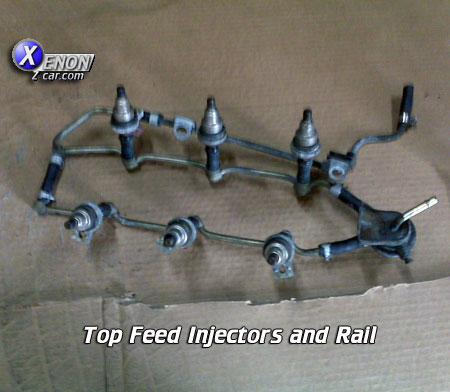
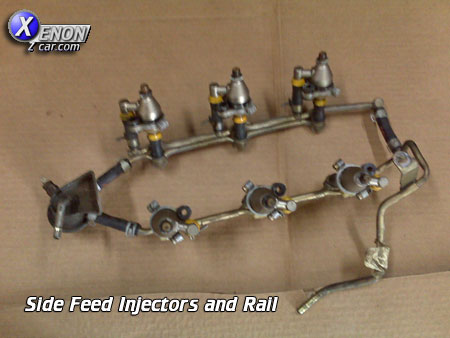
*WARNING* - Do this modification at your own risk. We Are not responsable for any issues of your own doing.
Injector Differences
- NA injectors: ~180cc/min
- Turbo injectors: ~260cc/min
- Top Feed injectors: have only one connection to the fuel Rail and it is on the top of the injector
- Side(Dual)Feed injectors: have two connections to the fuel Rail one of them is on the top of the injector and the other is on the lower body. See the image above
High impedance ECU with low impedance injectors: You must install six 6–10Ω 10W dropping resistors to avoid damaging the injector drivers. If you add dropping resistors, the fuel injectors must be rewired to factory spec (pre-service campaign).
Low impedance ECU driving high impedance injectors: This setup should operate normally.
Feed type does not matter to the ECU. What matters are impedance and flow rating. However, the lower intake manifolds differ; you may need to shave or shim the injector mounting area if swapping between types.
Common Problems
- Random Misfire
- Fuel Smell from exhaust
- Black Smoke from exhaust
- Dead Cylinder or cylinders
Fuel Injector Failure Modes
There are two primary ways fuel injectors can fail:
-
Clogged Injectors:
- Often caused by dirt, debris, or bad fuel—especially common if the car has been sitting for a long time.
- The injector may still pulse and produce an audible click when supplied with power and ground, but little or no fuel is delivered.
-
Solenoid Failure:
- The internal solenoid can fail, causing the injector to stick either open or closed.
- Stuck Open: Injector constantly dumps fuel into the cylinder when the key is turned on. This causes the fuel rail to lose pressure and can wash the protective oil film from the cylinder wall. Excess fuel may dilute the engine oil, which can lead to bearing failure if left unresolved.
- Stuck Closed: Injector will not supply fuel to the cylinder, causing a dead cylinder and rough running.